



















Inside the article
Request a product demo
Get a demo and clarify your doubts about our software.
Key Takeaways
- Business space rent varies widely based on location, demand, and property type, with costs ranging from budget-friendly to premium pricing in major cities.
- Rent is calculated using price per square foot, along with factors like rentable vs usable space and lease structure, which directly affect total cost.
- Your actual expenses go beyond base rent, including maintenance, utilities, deposits, and hidden charges that can significantly increase overall spending.
- Different space types have different cost structures, such as office, retail, co-working, and warehouse spaces, each suited for specific business needs.
- Lease type and key factors like location, size, and amenities play a major role in determining how much you pay over time.
- Smart budgeting and cost-saving strategies, such as choosing the right location, optimizing space, and negotiating lease terms, help reduce expenses and improve long-term profitability.
Renting a business space comes with many hidden costs. Understanding these costs helps you plan better and avoid surprises.
In this guide, you will learn how much it costs to rent a business space in 2026 and how to manage your budget smartly.
Average Cost of Renting a Business Space
The cost of renting business space in the U.S. varies depending on the city, demand, and space size.
- High-cost cities (such as New York, San Francisco, and Boston): $55–$85 per sq. ft.
- Medium-cost cities: $32–$65 per sq. ft.
- Affordable locations: $28–$45 per sq. ft.
- Budget-friendly areas: $20–$48 per sq. ft.
Estimated monthly rent based on space size:
- Small spaces: $500–$2,000 per month
- Medium spaces: $2,000–$10,000 per month
- Large spaces: $10,000+ per month
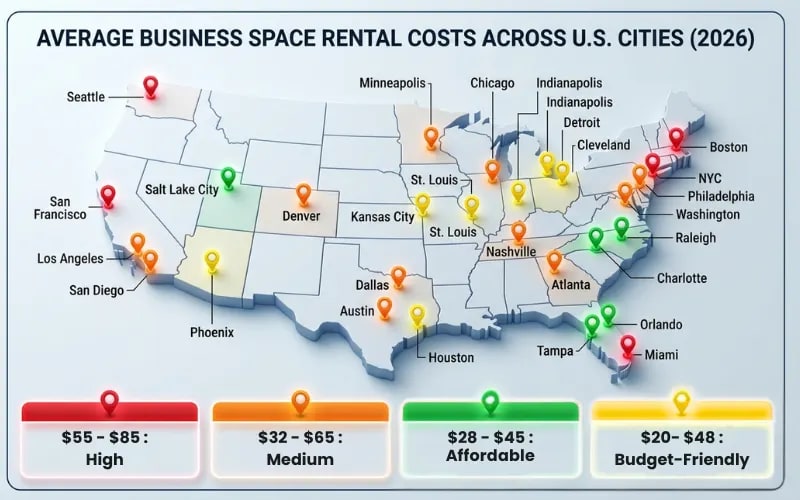
US business space rental cost map
Source: https://www.commercialcafe.com/blog/national-office-report/
Location plays a role in pricing, but it is better understood in detail when comparing demand, property type, and market conditions. These factors are explained clearly in the sections below.
How Business Space Rent Is Calculated
Price Per Square Foot Explained
Rent is mostly calculated using the price per square foot. This means you pay based on the total space you use. For example, if the rate is $30 per square foot and your space is 1,000 sq ft, your yearly rent will be $30,000. This method helps compare different properties easily. Higher rates are usually seen in busy cities, while lower rates are found in less crowded areas. Always check this number first before choosing a space.
Monthly vs Annual Rent Structure
Definition
Common Usage
Calculation Method
Transparency
Flexibility
Example
What You Actually Pay When Renting a Business Space
Base Rent
Base rent is the main cost you pay for the space. It is calculated using the price per square foot. This is the fixed amount you agree on in the lease. It does not include extra costs. The price depends on location, demand, and property type. Always check if the base rent fits your budget before moving forward.
Maintenance and CAM Charges
CAM means Common Area Maintenance. This includes cleaning, security, parking, and building upkeep. These charges are shared by all tenants in the building. You pay a part of it along with your rent. Sometimes this cost changes based on usage. It is important to ask for a clear breakdown before signing the lease.
Utilities and Service Costs
Utilities include electricity, water, internet, and waste services. Some properties include these in rent, but many do not. You may have to pay them separately every month. Service costs can also include air conditioning and heating. These costs depend on your usage, so they can change every month.
Security Deposits and Upfront Costs
Most landlords ask for a security deposit before you move in. This is usually equal to one to three months of rent. You may also need to pay advance rent, legal fees, and setup costs. These are one-time payments, but they can be high. Planning these costs early helps avoid financial stress.
Hidden Costs Most Renters Overlook
Many renters forget about small extra costs. These include parking fees, repair charges, insurance, and property taxes in some cases. Some leases also include annual rent increases. Late payment penalties can also add to your cost. Always read the agreement carefully to understand the full cost before making a decision.
Types of Business Spaces and Their Cost Differences
Choosing the right type of business space plays a major role in determining your overall rental cost. Each category comes with its own pricing structure, amenities, and location advantages.
Office Spaces
Office spaces are the most common choice for businesses such as startups, IT companies, agencies, and corporate firms. These spaces are typically located in commercial buildings or business parks.
Costs vary based on:
- Location (central business districts cost more)
- Building grade (A, B, or C class offices)
- Amenities like elevators, security, parking, and maintenance
Premium office spaces in prime locations tend to have higher rent per square foot, while suburban or shared office setups are more affordable.
Retail Spaces
Retail spaces are built for businesses that directly interact with customers, such as shops and showrooms. These spaces are usually located in areas with strong visibility and customer movement, making them suitable for sales-driven businesses.
Cost factors include:
- Visibility and foot traffic
- Storefront size and layout
- Nearby competition and brand presence
Retail rents are often higher than office spaces due to their revenue-generating potential, especially in prime commercial zones.
Co-working Spaces
Co-working spaces are shared work environments designed for flexibility. They are commonly used by freelancers, startups, and small teams who need ready-to-use infrastructure without long-term commitments.
Key pricing elements:
- Type of seating (hot desk, dedicated desk, private cabin)
- Included amenities (Wi-Fi, meeting rooms, utilities)
- Location and brand of the co-working provider
While the per-seat cost may seem higher, co-working spaces reduce upfront costs since utilities and maintenance are usually included.
Warehouse and Industrial Spaces
These spaces are used for storage, manufacturing, or logistics operations. They are typically located in industrial zones or the outskirts of cities.
Cost depends on:
- Size and ceiling height
- Accessibility to highways or transport hubs
- Infrastructure like loading docks and power supply
Warehouse and industrial spaces generally have lower rent per square foot compared to office and retail spaces, but they may involve additional costs for customization and logistics setup.
Renting vs Co-working vs Shared Spaces
Pricing Model
Upfront Cost
Monthly Cost
Included Services
Lease Flexibility
Commitment Level
Scalability
Best Use Case
Long-Term Cost Efficiency
Control Over Space
Lease Types and How They Affect Your Cost
Gross Lease
A gross lease is simple and easy to understand. You pay one fixed rent amount every month. This rent usually includes base rent, maintenance, and some utilities. It helps you plan your budget better because costs do not change often. This type is good for small businesses that want stable expenses. Always confirm what is included in the rent before signing.
Net Lease (NNN)
A net lease means you pay more than just base rent. You also pay property taxes, insurance, and maintenance costs. This is why it is called triple net (NNN).
Simple cost formula:
Total Rent = Base Rent+Taxes+Insurance+Maintenance
In an NNN lease, you do not just pay rent. You also pay all property-related costs. This is why the base rent looks low, but the final cost becomes higher. Always check these extra charges before choosing this lease type.
Modified Gross Lease
This lease is a mix of gross and net leases. You pay base rent plus some shared costs. The landlord and tenant split expenses like maintenance or utilities. This gives a balance between fixed and variable costs. It offers more flexibility compared to other lease types. Always check which costs you are responsible for.
Short-Term vs Long-Term Lease Impact
Lease duration also affects your cost. Short-term leases give flexibility but usually have higher monthly rent. Long-term leases offer lower rent but lock you in for a longer time. If your business is new, a short-term lease is safer. If you want stability, a long-term lease can save money. Always choose based on your business goals and future plans.
Key Factors That Influence Rental Costs
Location and Market Demand
Location is one of the biggest factors affecting rent. Spaces in high-demand areas such as city centers and commercial zones cost more due to better visibility, accessibility, and customer flow. Areas with lower demand offer more affordable options but may have limited business exposure. Choosing the right location depends on balancing cost with business needs.
Property Size and Layout
The total size of the space directly affects the cost. Bigger spaces mean higher rent. But layout also matters. A well-planned space can help you use every area properly. Poor layout may waste space and increase your cost without real value. Always check both size and usability before deciding.
Business Type and Usage
Your business type can change the rent you pay. Retail stores in prime areas usually cost more than offices or storage spaces. Some businesses also need special setups like ventilation, parking, or safety features. These needs can increase the overall cost. Make sure the space fits your business use.
Building Quality and Amenities
Modern buildings with better facilities cost more. Features like security, elevators, parking, air conditioning, and maintenance services add value but also increase rent. Older buildings may be cheaper, but they may need extra setup costs. Choose based on what your business really needs.
Lease Duration
Lease duration also impacts cost. Short-term leases offer flexibility, while long-term leases usually provide better pricing stability.
Tips to Reduce Business Space Rental Costs
Negotiate Lease Terms
Do not accept the first offer. Always try to negotiate the rent and terms. You can ask for lower rent, free months, or reduced deposits. This helps you save money from the start.
Choose the Right Location
Prime areas are expensive, but not always necessary. Choose a location that fits your business needs, not just popularity. Slightly outside the main areas can reduce cost while still giving good reach.
Optimize Space Usage
Do not take more space than you need. Use smart layouts to manage your work area. A well-used small space can save a lot of money compared to a large unused space.
Consider Flexible or Shared Spaces
Flexible spaces like co-working or shared offices cost less. You only pay for what you use. This is a good option for startups and small teams who want to reduce fixed costs.
Conclusion
Choosing the right business space is not just about finding a place. It is about making a smart financial decision that supports your growth. When you clearly understand costs, lease types, and hidden charges, you can avoid mistakes and plan better.
If you’re wondering how to market and grow your business after setting up your space, check out our guide on the importance of marketing in small businesses for simple and practical ideas.
Request a product demo
Get a demo and clarify your doubts about our software.