



















Inside the article
Request a product demo
Get a demo and clarify your doubts about our software.
Key Takeaways
- Property management companies handle tenant management, rent collection, maintenance, and ensure compliance with legal regulations.
- They help save time, reduce vacancies, and maximize rental income.
- Management fees typically range from 8%–12% of monthly rent, with additional service charges.
- Costs vary based on property type, location, services, and portfolio size.
- Choose a property management company based on its experience, pricing, reviews, and technology.
- For larger portfolios, property management software can be a cost-effective alternative to hiring an external property management team.
Introduction
Owning a rental property can be a rewarding investment, but managing it takes more than collecting rent. From finding reliable tenants and handling maintenance to ensuring legal compliance, the day-to-day responsibilities can quickly add up.
So, what does a property management company do? Simply, it manages the daily operations of your rental property on your behalf. If you're a small landlord looking to streamline rent collection, tenant communication, maintenance tracking, and financial management, explore our guide on the best 7 rental property software for small landlords to find solutions that can simplify property management and support your business as it grows.
What does a property management company do?
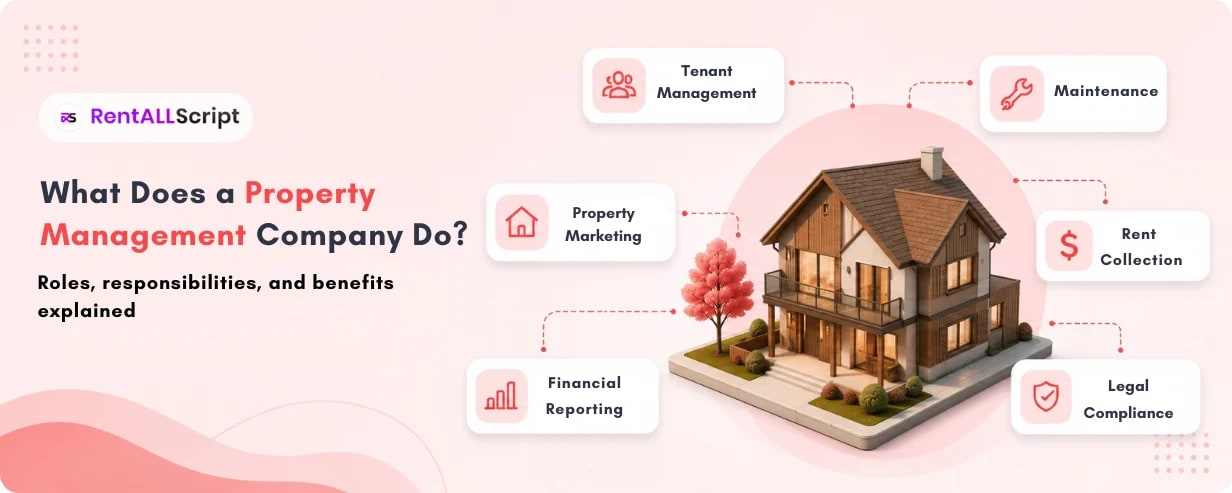
Manage tenant marketing, screening, and leasing
Property management companies screen applicants by verifying income, conducting background and credit checks, checking references, and preparing lease agreements. By selecting reliable tenants who pay rent on time and care for the property, they help reduce vacancies and ensure a steady rental income.
Handle rent collection and financial management
Property management companies streamline rent collection by setting up secure payment methods, tracking payments, and following up on late rent when necessary. They also maintain accurate financial records, manage security deposits, and provide regular income and expense reports, giving property owners a clear view of their property's financial performance.
Coordinate property maintenance and repairs
Property management companies oversee routine maintenance and emergency repairs to ensure rental properties are maintained in excellent condition. They coordinate with trusted contractors, respond to tenant maintenance requests, schedule regular inspections, and ensure repairs are completed promptly. This proactive approach helps protect the property's value while keeping tenants satisfied.
Ensure legal compliance and risk management
Property management companies help property owners comply with rental laws, lease regulations, and local housing requirements. They handle proper documentation, manage lease agreements, oversee security deposit procedures, and guide owners through legal processes when needed, helping reduce risks and avoid costly disputes.
Self-managing a rental property vs Property management company
Emergency support
Vendor network
Property inspections
Conflict resolution
Administrative work
Scalability
Owner involvement
Technology & automation
Business growth
Peace of mind
Advantages of hiring a property management company
Improve the tenant experience
Happy tenants are more likely to renew their leases and take better care of the property. Property management companies provide timely communication, faster issue resolution, and professional support that enhances the overall tenant experience.
Make informed investment decisions
Property managers provide financial reports, occupancy insights, and rental market data that help property owners make smarter decisions about pricing, upgrades, and future investments.
Minimize financial and legal risks
From lease enforcement to regulatory compliance, property management companies help reduce the risk of costly disputes, missed payments, and legal issues that can impact your rental business.
Support long-term portfolio growth
As your rental portfolio expands, managing multiple properties becomes more challenging. A property management company provides the expertise and systems needed to scale operations efficiently while maintaining consistent service quality.
When should you hire a property management company?
Managing multiple rental properties
As your rental portfolio grows, so do your responsibilities. Managing multiple properties means handling tenant requests, maintenance, rent collection, and paperwork across different units. A property management company streamlines these tasks, helping you operate more efficiently while freeing up time to focus on expanding your investments.
Owning rental properties in different locations
Managing rental properties in different cities or regions can be challenging, especially when it comes to handling maintenance, inspections, and tenant concerns. A local property management company takes care of these responsibilities on your behalf, ensuring your properties are well-managed while giving you peace of mind, no matter where you are.
Limited time for property management
If you have a busy schedule, managing a rental property can become difficult. A property management company takes care of tenant communication, rent collection, maintenance, and other daily tasks, allowing you to enjoy the benefits of rental income without the day-to-day responsibilities.
First-time rental property owners
If you're new to rental property ownership, managing tenants, leases, and legal requirements can be overwhelming. A property management company provides the expertise and support needed to handle daily operations, helping you avoid common mistakes and manage your property with confidence.
How much does it cost to hire a property management company?
Common property management fee structures
Most property management companies charge a monthly management fee, typically ranging from 8% to 12% of the monthly rent collected, although some offer a flat monthly fee instead. Percentage-based pricing is the most common because it aligns the manager's success with your property's performance. Flat-fee models may be suitable for owners who prefer predictable monthly costs.
Additional fees you should know about
Besides the monthly management fee, some property management companies may charge additional fees for specific services, such as:
- Tenant placement fee: Typically 50–100% of one month's rent for marketing the property, screening applicants, and preparing the lease.
- Lease renewal fee: Usually $100-$350 as a flat fee when renewing an existing tenant's lease.
- Maintenance coordination fee: Some companies charge a 10-15% markup on contractor invoices or a separate fee for coordinating repairs.
- Setup or onboarding fee: A one-time fee of $100–$350 to set up your property in the company's management system (some companies waive this fee).
- Eviction coordination fee: Typically $200–$500, excluding legal and court costs, if eviction becomes necessary.
- Other possible fees: Depending on the company, you may also encounter vacancy fees, property inspection fees, or early contract termination fees.
Before signing a management agreement, review the fee structure carefully so you know exactly which services are included and which may incur additional costs.
Factors that affect property management costs
- Property location: Management costs may differ based on local rental market conditions and regional pricing.
- Property type and condition: Larger, older, or high-maintenance properties often require more management effort, which can increase fees.
- Scope of services: Companies offering comprehensive services such as tenant placement, maintenance coordination, inspections, and financial reporting may charge more than those providing basic management.
- Number of properties: Owners with multiple rental properties or units may qualify for discounted management rates or portfolio pricing.
Based on the cost breakdown discussed in this section, you can find overall cost of hiring a property management company goes beyond the monthly management fee. Additional expenses such as tenant placement, lease renewals, maintenance coordination, inspections, and other service charges can significantly increase your long-term costs, especially as your rental portfolio grows.
Source: All Property Management
How to choose the right property management company
Evaluate experience and industry expertise
Choose a property management company with proven experience managing properties similar to yours. Consider their years in business, the types of properties they manage, local market expertise, and tenant retention record. You can also ask for client references or case studies to better understand the quality of their services and overall performance.
Compare pricing and contract terms
Compare quotes from multiple property management companies rather than focusing solely on the lowest price. Review their management fees, additional charges, contract length, cancellation policies, and included services to ensure you're getting the best value for your investment.
Check reviews and client testimonials
Reading online reviews and client testimonials can give you valuable insights into a company's reliability and service quality. Look for consistent feedback on communication, maintenance responsiveness, tenant satisfaction, and overall professionalism before making your decision.
Assess communication and technology
Choose a property management company that offers clear communication and uses modern technology. Features like online owner portals, digital rent payments, maintenance tracking, and regular financial reports make it easier to stay informed and manage your property efficiently.
Conclusion
In this blog, we've explored what a property management company does and how it helps simplify rental property management. While hiring a property management company is a practical option for owners with multiple rental properties, it's not the only path to building a successful rental business.
If you're looking for a more scalable investment opportunity, consider entering the vacation rental and short-term rental market. Instead of relying on third-party management services, you can launch your own vacation rental platform with a white-label vacation rental script, giving you complete control over your business while creating new revenue opportunities in the growing short-term rental industry.
Ready to build your own rental platform?
If you're planning to move beyond traditional property management, download our free guidebook to launch your own vacation rental platform.
Request a product demo
Get a demo and clarify your doubts about our software.