



















Inside the article
Request a product demo
Get a demo and clarify your doubts about our software.
Key Takeaways
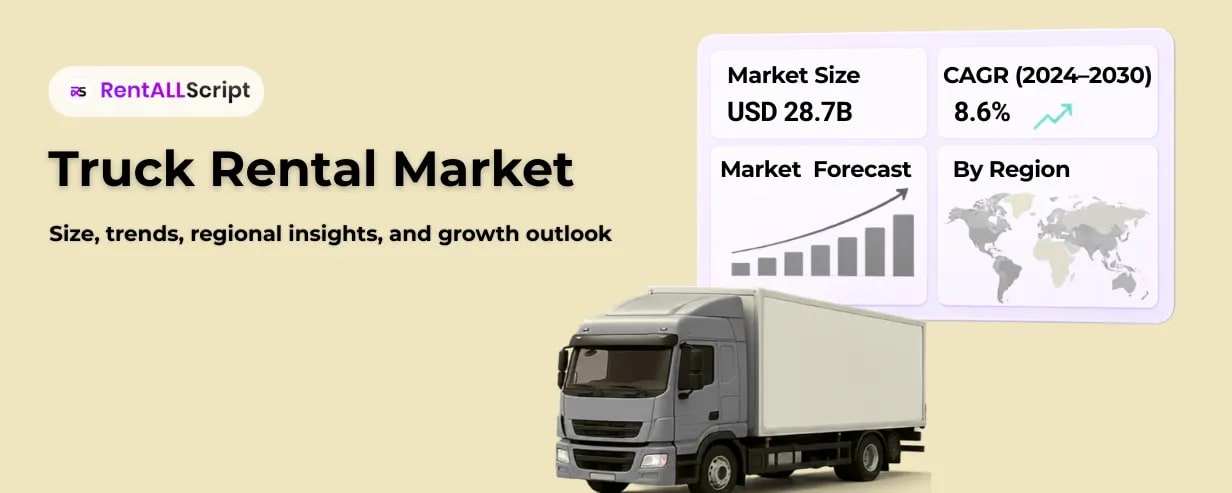
- The truck rental market was valued at USD 131–145 billion in 2024–2025 and is expected to reach USD 200–387 billion by 2035.
- The industry is projected to grow at a 7%–10%+ CAGR, driven by strong market demand.
- E-commerce growth, urbanization, and infrastructure projects continue to fuel truck rental adoption.
- North America leads the market with approximately 60% share, while Europe holds 25%.
- Digital fleet management, GPS tracking, and electric trucks are transforming the industry.
- With strong growth potential and increasing demand for flexible transportation, now is an excellent time to start a truck rental business.
The trucking industry keeps the world moving. From e-commerce deliveries and construction materials to manufacturing supplies and retail inventory, businesses rely on trucks every single day to keep operations running smoothly.
However, not every company wants the financial burden of owning and maintaining a fleet. Purchasing vehicles requires significant capital, and ongoing expenses such as maintenance, repairs, insurance, and depreciation can quickly add up.
This is where the truck rental market comes into play. Let's explore the size, trends, regional dynamics, and growth outlook shaping the truck rental market today.
Understanding the truck rental market
Overview of the global truck rental industry
The global truck rental industry offers short- and long-term rentals for light-duty, medium-duty, and heavy-duty trucks across sectors such as logistics, construction, manufacturing, and retail. Services are provided by rental companies, leasing providers, and third-party operators. While most fleets still use internal combustion engine (ICE) vehicles, electric trucks are booming as sustainability initiatives grow.
The truck rental market was valued at around USD 131.31 billion to USD 144.86 billion between 2024 and 2025 and is projected to grow significantly over the next decade. Leading companies such as U-Haul, Penske, Ryder, Enterprise, Hertz, Avis, Sixt, and Europcar compete through fleet size, technology adoption, and service quality.
Source: Market Research Future
Key factors driving market growth
- Increasing preference for flexible fleet solutions.
- Rising vehicle ownership and operating costs.
- Adoption of telematics and digital booking technologies.
- Growing demand for electric and hybrid trucks.
- Stricter environmental regulations and sustainability initiatives.
Why the truck rental market is growing
Expansion of e-commerce and last-mile delivery
The rapid growth of e-commerce has increased the demand for delivery vehicles. To meet rising order volumes and seasonal demand, many businesses rely on rental trucks instead of expanding their permanent fleets. This flexibility makes rentals an attractive option for last-mile delivery operations.
Rising urbanisation and infrastructure development
Growing urban populations and large-scale infrastructure projects are driving the need for transportation services. Construction materials, equipment, and goods must be moved efficiently, creating steady demand for rental trucks. This trend is particularly strong in developing and emerging economies.
Increasing demand for flexible transportation solutions
Businesses today need transportation solutions that can adapt to changing demand. Truck rentals allow companies to scale operations quickly, access different vehicle types, and improve cash flow without long-term ownership commitments. This flexibility is especially valuable for small and medium-sized businesses.
Industries driving demand for truck rentals
Logistics and transportation
The logistics and transportation sector is one of the largest users of truck rental services. Companies often rent vehicles to manage last-mile deliveries, long-haul transportation, and seasonal demand spikes. Rental trucks help businesses increase capacity without making long-term investments, allowing them to respond quickly to changing supply chain requirements.
Construction
Construction companies frequently rent heavy-duty trucks to transport building materials, machinery, and equipment. Since construction projects vary in size and duration, renting provides a cost-effective solution while avoiding the expenses associated with fleet ownership and maintenance.
Retail and e-commerce
The rapid growth of online shopping has increased the need for reliable delivery vehicles. Retailers and e-commerce businesses use rental trucks to handle peak shopping seasons, promotional campaigns, and urban distribution needs.
Manufacturing
Manufacturing companies depend on efficient transportation to move raw materials and finished products between suppliers, production facilities, and customers. Truck rentals provide additional capacity during periods of increased production and offer flexibility for project-based transportation requirements.
Small and medium-sized businesses
Small and medium-sized businesses often choose truck rentals because they provide affordable access to commercial vehicles without high upfront costs. Rentals allow SMEs to manage cash flow, reduce financial risk, and select vehicle types that best suit their operational needs.
Emerging trends in the truck rental industry
Digital fleet management and online booking
Digital technologies are transforming the way truck rental businesses operate. Mobile apps, online booking platforms, and automated fleet management systems allow customers to reserve vehicles quickly and conveniently. These tools also help rental companies streamline operations, reduce paperwork, and improve overall efficiency.
GPS tracking
GPS tracking and telematics have become essential features in modern rental fleets. These technologies provide real-time vehicle visibility, optimize routes, and help monitor fleet performance. As a result, businesses can improve vehicle utilization, enhance safety, and reduce fuel costs and downtime.
Electric and sustainable truck fleets
Sustainability is becoming a major focus across the transportation industry. Growing environmental regulations, government incentives, and corporate sustainability goals are encouraging rental companies to add electric and hybrid trucks to their fleets. These vehicles are particularly valuable for urban areas and low-emission zones.
Subscription-based rental models
Subscription-based services are gaining popularity among businesses seeking greater flexibility. These plans offer predictable monthly costs and often include maintenance and other support services. By providing long-term access without ownership commitments, subscription models help businesses manage expenses more effectively.
Regional analysis of the truck rental market
North America
North America continues to lead the global truck rental market, accounting for approximately 60% of the market share in one industry analysis. The region's growth is driven by strong e-commerce activity, advanced logistics networks, and high demand for flexible transportation solutions.
The rise of online shopping and urban deliveries has increased the need for rental trucks, including smaller and electric vehicles that can operate efficiently in city environments. Supported by major players such as U-Haul, Penske, Ryder, and Enterprise, North America remains a key market for truck rental services.
Europe
Europe is the second-largest truck rental market, accounting for approximately 25% of the global market share. Growth in the region is driven by expanding logistics operations, rising e-commerce activity, and increasing cross-border trade.
Countries such as Germany, France, and the UK lead the market, supported by major rental providers like Sixt and Europcar. Stricter environmental regulations are also encouraging the adoption of newer, low-emission vehicles, prompting rental companies to modernize their fleets.
With continued investments in transportation infrastructure, sustainability initiatives, and digital technologies, the European truck rental market is expected to experience steady growth through 2030.
Asia Pacific
Asia Pacific is one of the fastest-growing regions in the truck rental market, driven by rapid urbanization, expanding logistics networks, and the continued growth of e-commerce. According to industry reports, the region accounted for 39.84% of the global truck rental market in 2023, making it a major contributor to industry growth.
Countries such as China, India, and Australia are leading market growth, supported by government investments in transportation infrastructure and logistics development. As competition intensifies, rental providers are focusing on fleet modernization, technology adoption, and enhanced customer service to strengthen their market position.
Middle East and Africa
The Middle East and Africa truck rental market accounts for approximately 5% of the global market share and continues to grow due to increasing urbanization, infrastructure development, and rising logistics demand.
Countries such as the UAE, Saudi Arabia, and South Africa are key contributors, supported by government investments in transportation and trade. As both local and international providers expand their operations, the region offers strong growth potential for truck rental businesses.
Key challenges in the truck rental market
Rising operating costs
Increasing fuel prices, vehicle maintenance expenses, insurance premiums, and fleet acquisition costs continue to put pressure on rental companies. These rising costs can affect profit margins and lead to higher rental rates.
Driver shortages
The industry continues to face a shortage of qualified drivers due to an aging workforce, high turnover rates, and strict licensing requirements. This can reduce fleet availability and impact service efficiency.
Regulatory compliance
Truck rental operators must comply with evolving emissions standards, safety regulations, and regional transportation laws. Meeting these requirements often involves additional investments in technology, vehicle upgrades, and compliance management.
Fleet utilization issues
Maintaining high fleet utilization remains a challenge, especially during periods of fluctuating or seasonal demand. Rental companies must carefully balance vehicle availability with customer needs to maximize operational efficiency.
Future outlook for the truck rental market
Market growth projections
Industry forecasts suggest the truck rental market could grow from approximately USD 121–142 billion today to between USD 200 billion and USD 387 billion by 2030–2035. With projected annual growth rates ranging from 7% to over 10%, segments such as light-duty and electric trucks are expected to see particularly strong demand.
Expansion opportunities across global markets
Emerging markets in the Asia Pacific, Latin America, the Middle East, and Africa offer significant growth potential due to rapid urbanization, infrastructure investments, and expanding e-commerce activities. In developed regions, innovation in fleet technology and sustainable transportation solutions will continue to drive market growth.
Expansion of rental services across industries
Truck rental services are expected to gain wider adoption across industries such as manufacturing, retail, and small and medium-sized businesses. At the same time, providers are exploring new offerings, including specialized vehicle rentals and technology-driven solutions, to meet evolving customer needs and expand their market reach.
Conclusion
The truck rental market is growing rapidly as businesses seek affordable and flexible alternatives to fleet ownership. As businesses increasingly choose rentals over ownership, the industry offers promising opportunities for entrepreneurs worldwide. For entrepreneurs, this presents a promising opportunity to enter a market with strong future potential.
If you're planning to start a truck rental business, now is the right time to take advantage of this growing demand. With RentALLScript, you can launch your truck rental business faster and focus on scaling your operations.
Ready to enter the truck rental market?
Explore how our proven solution simplifies fleet management, bookings, and day-to-day operations.