

















Inside the article
Request a product demo
Get a demo and clarify your doubts about our software.
Key Takeaways
- Food delivery apps look simple, but they run on constant coordination between restaurant staff, drivers, and an admin.
- Restaurants must accept orders quickly, or the food delivery app may limit future order visibility.
- Drivers are assigned automatically based on GPS proximity and availability.
- An admin dashboard manages commissions, refunds, disputes, and driver activity.
- Order value is split between the restaurant, driver earnings (plus tips), and app commission (usually 15–30%).
- Platforms like Uber Eats, DoorDash, and Grubhub function as logistics networks, not just ordering apps.
- Running a delivery app requires four essentials: the tech stack, restaurant partners, a reliable driver fleet, and a strong ability to handle pressure.
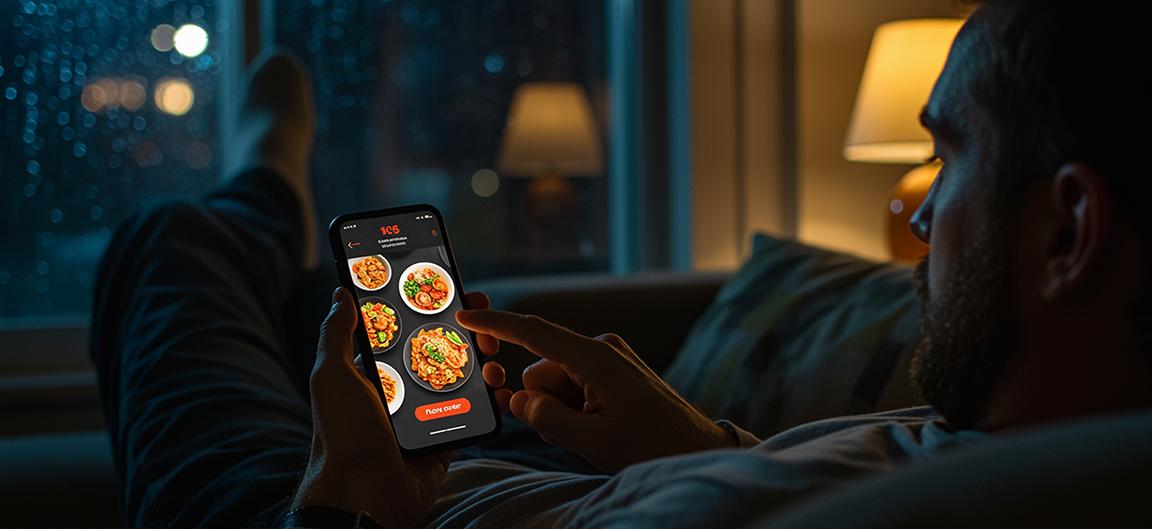
It’s 8:30 PM. You are lying on the couch, it’s raining, and you are starving.
You pull out your phone. You tap an app icon. You swipe past the pizza. You ignore the sushi. And then you see it: the perfect, spicy Pad Thai. You tap "Place Order."
And then, you wait….
In your mind, it’s simple. You think: “I paid the money. The restaurant puts food in a box. A guy drives it here. It’s easy.”
You are wrong.
You think it’s Easy, but behind that screen, it’s a war zone.
Here is what actually happens when you order food through the food delivery app.
What Happens After You Click?
The second your thumb leaves the screen, you forget about the mechanics, but in the real world, a chain reaction of chaos begins.
1. Restaurant
You imagine a chef calmly waiting for your order so they can start cooking just for you.
The Reality: The staff is rushing to feed the people sitting in the dining room. Then, the delivery tablet starts beeping.
They know one thing: if they don't hit "Accept" immediately, the app’s algorithm will punish the restaurant and stop sending customers.
So, they tap the screen. Your order gets thrown onto a massive pile of tickets, and the rush begins.
2. Delivery Partner
You think the app has a specific fleet of drivers waiting at the restaurant just for you.
The Reality: It is a digital dragnet. The moment the restaurant accepts, the system instantly scans the GPS location of every driver in the area.
It is looking for one thing: Proximity.
The system fetches the nearest Delivery Partner who is currently marked "Online" and pings their phone. The driver closest to the restaurant gets the alert first. They tap "Accept," and just like that, they are yours.
3. Admin
You think the app runs on autopilot.
The Reality: Behind the screen, a human is watching the entire board in "God Mode." While the driver fights rain and the chef fights tickets, the Admin sits in the control tower.
They don’t cook or drive; they pull the strings. From setting commissions and delivery fees to issuing refunds and banning drivers, the Admin controls the entire operation with a single click.
The Business: Why Did That Burrito Cost $20?
This is the part that usually makes you grumpy. “Why is the delivery fee $4? Why is the service fee $2?”
You assume the app is greedy, but running this machine is expensive.
- Restaurant Share: The restaurant takes home the bulk of the money for the food.
- Driver Compensation: The driver keeps the delivery charge and 100% of your tip (usually).
- App Commission: The app takes a commission (15-30%) from the restaurant. This pays for the servers, the support team that answers when orders go missing, and the marketing that got you to download the app in the first place.
The Big Three
You probably have one of the "Big Three" on your phone right now. They look like menus, but they are actually logistics companies.
1. Uber Eats
They didn't build a new fleet from scratch; they weaponized their existing army of ride-share drivers. This allows them to move food with the same ruthless efficiency they use to move passengers.
2. DoorDash
They bypassed the crowded city centers to dominate the suburbs, where families place huge, high-value dinner orders. This strategy allowed them to capture the most profitable customers while competitors fought over single coffees.
3. Grubhub
As industry veterans, they started as a simple menu directory long before the delivery wars began. They eventually realized that to survive, they couldn't just list the food; they had to build the fleet to deliver it.
Could You Run One?
Now that you see the chaos, maybe you’re thinking: "I could do this better. I’d make an app just for home-cooked meals, or exclusively for late-night desserts, or simply connect restaurants in my local area”.
It sounds crazy, but people do it every day. The "titans" are too big to care about your local niche. If you, yes, the hungry customer on the couch, wanted to switch sides and become the owner, you wouldn't need to learn to code. You would need to learn to manage.
To run a successful food delivery app, you need four things:.
1. The Tech
You need a synchronized ecosystem of four platforms: Customer, Driver, Restaurant, and Admin. For the mobile apps, Flutter is the smart choice, ensuring smooth performance on both iOS and Android from a single codebase.
Instead of building from scratch, use a white-label solution like WooberlyEats. It provides this complete, scalable infrastructure out of the box, allowing you to skip the coding phase and focus entirely on launching your brand.
2. The Supply
Don't try to be Uber Eats tomorrow. You don't need 1,000 restaurants to start. You need 10.
You need to partner with the 10 best local restaurants in a specific neighbourhood. Convince them that you are the local partner who cares about their food, unlike the faceless giants. Win the neighbourhood first; the city comes later.
3. The Fleet
You don't need an army of strangers. You need 5 reliable drivers. You need drivers who know the neighbourhood shortcuts, who know the gate codes, and who show up on time. In the beginning, your drivers are the face of your brand. If they are fast and polite, the customer trusts you.
4. The Guts
This is the one thing you can't download. You need the ability to stay calm when a Friday night order goes wrong. When it rains, when a driver gets a flat tire, or when a chef screams at you, you need to be the coolest person in the room.
The tech handles the logic. The partners handle the food, but you handle the pressure.
The Order Arrived!
Ding-dong! 🔔
The order arrived…
You open the container. The steam rises. The Pad Thai smells incredible.
You pick up your fork, but before you take the first bite, you pause. You look at the app on your phone one last time.
It looks so simple, but now you know the truth. You aren't just looking at software. You are looking at a complex web of humans, vehicles, and data, all working in perfect sync just to feed you.
You take a bite. It tastes a little bit better knowing what it took to get there.
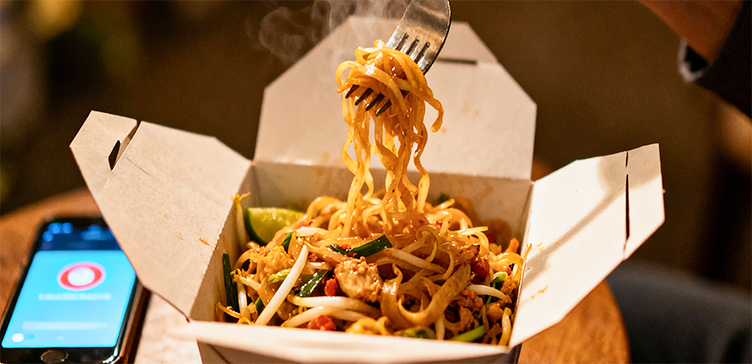
It turns out, it wasn't easy. It was just designed to look that way.
Request a product demo
Get a demo and clarify your doubts about our software.